
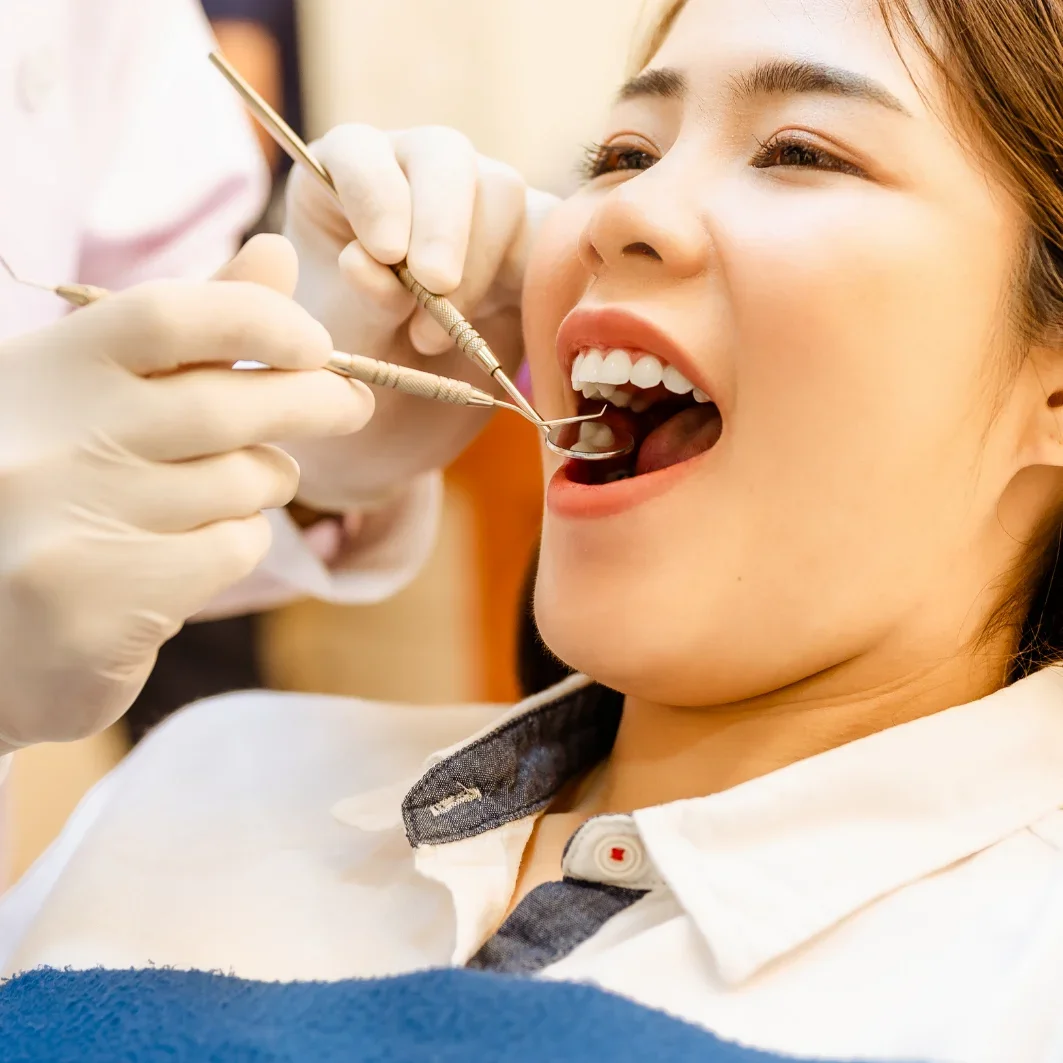
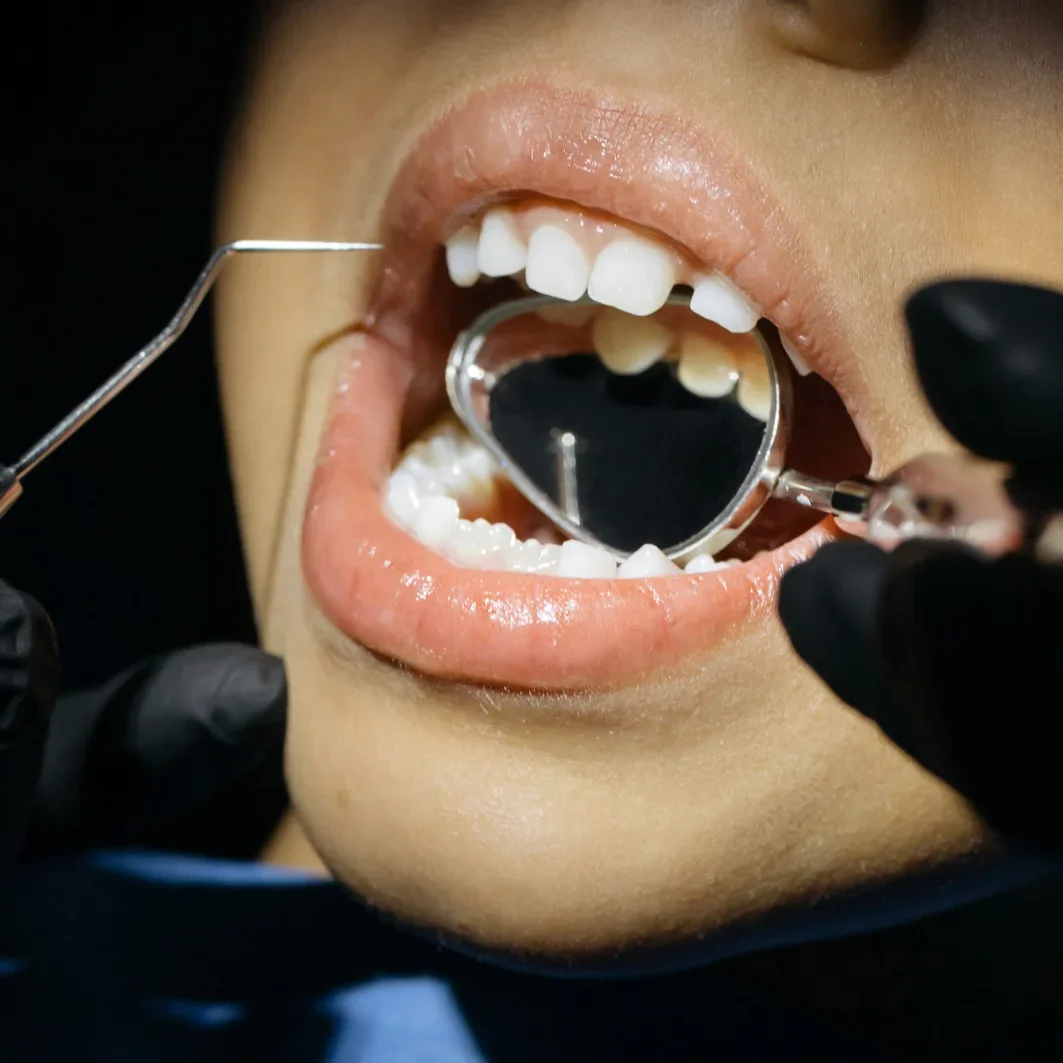
Dental implants replace missing teeth with titanium posts placed in the jawbone and topped with custom-made crowns, bridges or dentures. At InfiSmiles, implant treatment is planned by Dr Dhaval Patel, a BDS-qualified implantologist. After an examination and 3D scan, you receive a written plan with the steps, timeline and cost. Consultations are available at our Sayan and Nana Varachha clinics.
What are Dental Implants?
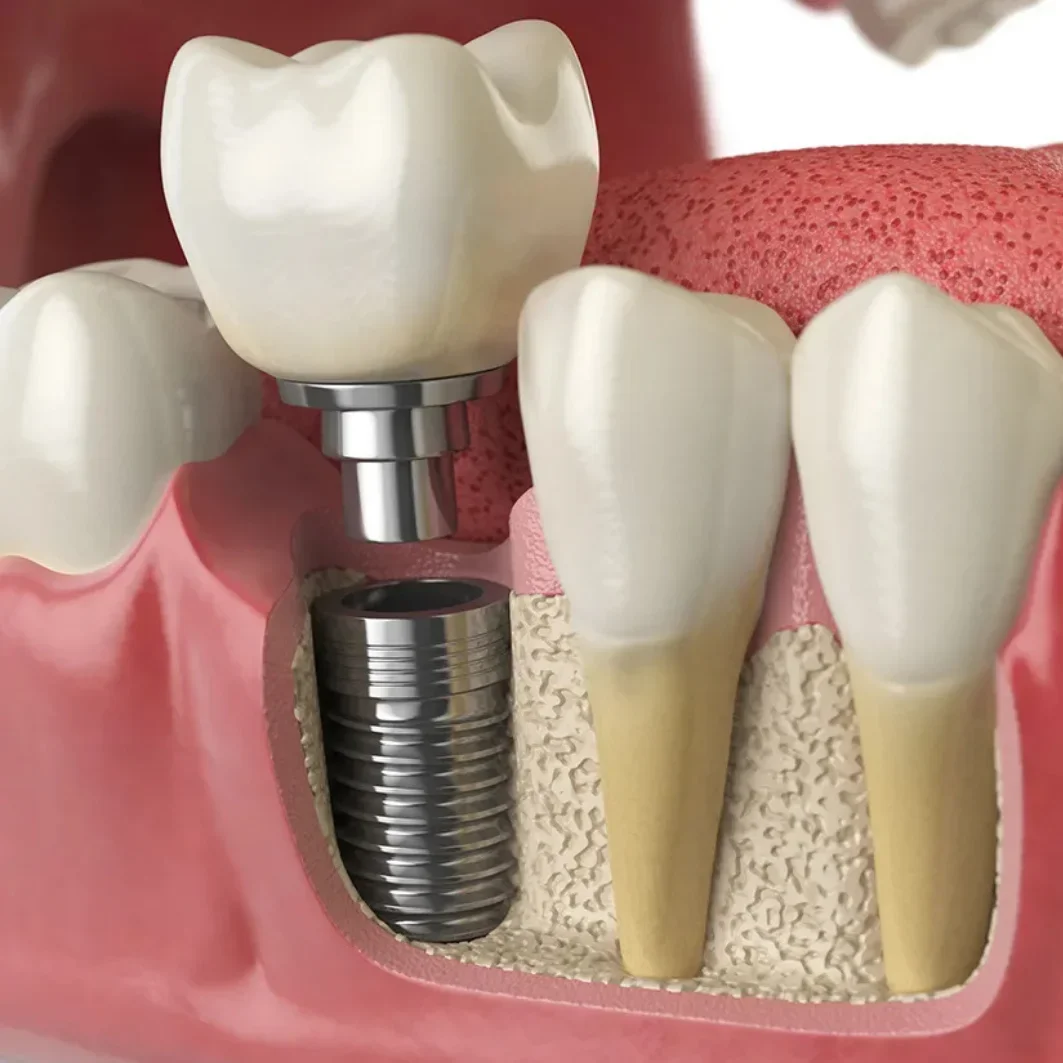
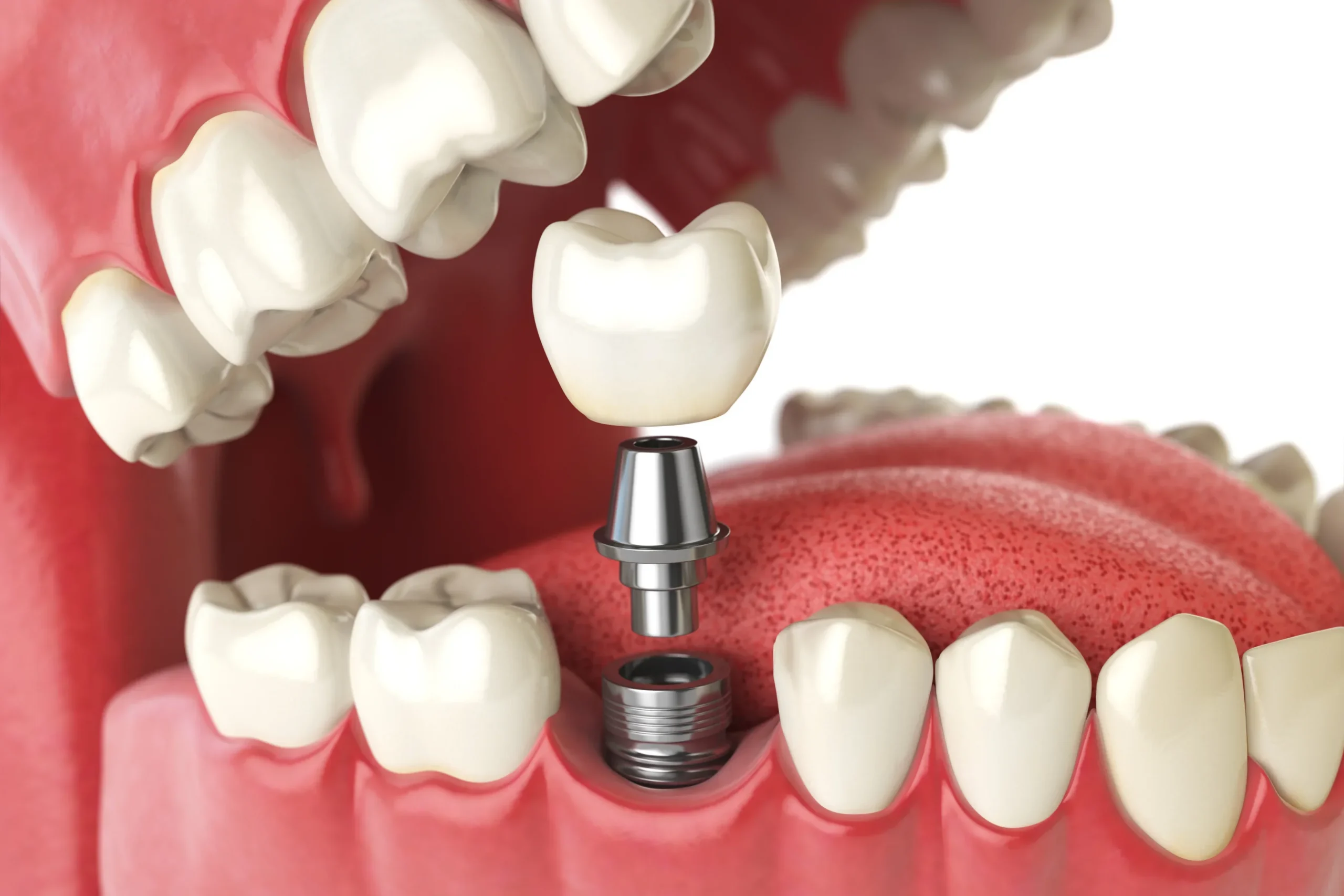
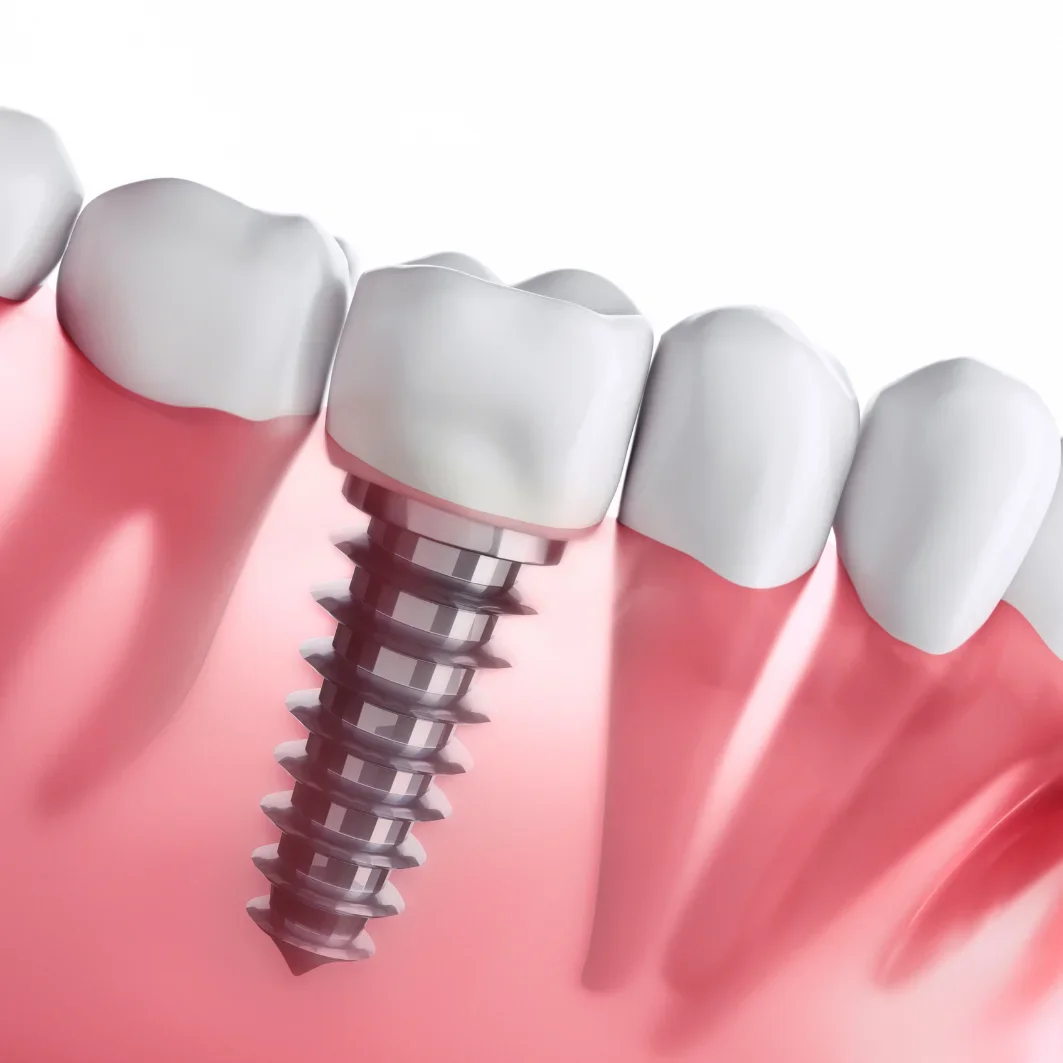
A dental implant is a small post, usually titanium, placed in the jawbone to replace the root of a missing tooth. Once the bone has bonded to the post, it holds a replacement tooth. An implant restoration has three parts:
Implant post: the artificial root, set in the jawbone
Abutment: the connector between the post and the tooth
Crown, bridge or denture: the visible, custom-made teeth. See dental crowns
Most implants are titanium. Ceramic (zirconia) options exist and suit selected cases. Unlike removable dentures, implants are fixed in the jaw. Like natural teeth, they need daily cleaning and regular check-ups.
When Dental Implants May Help
1. Missing one or more teeth
A gap can let neighbouring teeth drift and change how your teeth meet. An implant replaces the root as well as the visible tooth, and unlike a bridge it does not require the teeth beside the gap to be trimmed.
2. Loose or uncomfortable dentures
Implant-supported dentures are held by implants and move far less than conventional dentures. Many patients find eating and speaking easier. Suitability depends on your bone and gum health.
3. Difficulty chewing or speaking
Missing teeth can limit the foods you can eat and affect some sounds. Implant-supported teeth can improve biting comfort and confidence, although they may not feel identical to natural teeth.
4. Jawbone loss after tooth removal
After a tooth is removed, the bone that held it gradually shrinks. An implant passes chewing forces to the jawbone, which helps maintain bone at the implant site. Planning early, or bone grafting, may be advised.
5. Damaged, infected or badly decayed teeth
Your dentist will first check whether a tooth can be saved with a root canal and crown. If removal is needed, an implant is one replacement option, sometimes placed after the site has healed.
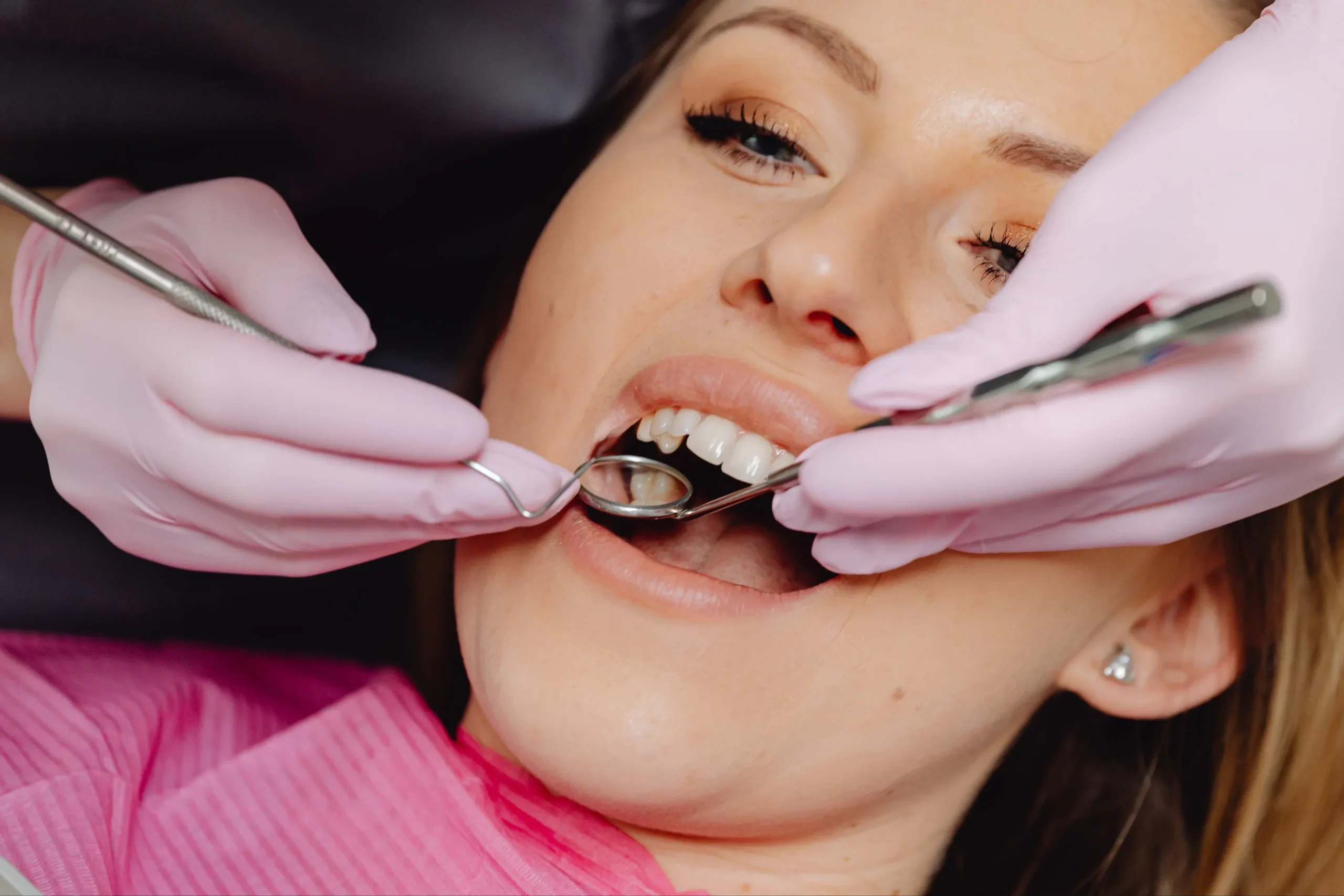
Picture Gallery
Who is a suitable candidate for dental implants?
Needs extra assessment:
- Smoking or tobacco use, which raises the risk of implant failure
- Diabetes that is not well controlled
- Untreated gum disease
- Past radiotherapy to the head or neck
- Medicines that affect bone, such as bisphosphonates
- Heavy teeth grinding
- Only an examination and 3D scan can confirm whether implants are right for you.
Types of implant treatment in Surat
Not every option suits every patient. Dr Dhaval Patel recommends a type based on your bone, gums and goals. Confirm availability of specialised options at your consultation.
1. Endosteal implants
The most commonly used type: a screw-shaped titanium post placed in the jawbone that later holds a crown, bridge or denture.
May suit: patients with enough bone height and width.
2. Subperiosteal implants
A custom metal frame sits on top of the jawbone under the gum instead of inside the bone. It is used less often and only in selected cases.
May suit: some patients with limited bone who cannot or prefer not to have bone grafting.
3. Zygomatic implants
Longer implants anchored in the cheekbone (zygoma) instead of the upper jaw. A specialised technique.
May suit: patients with severe upper jaw bone loss, after specialist assessment.
4. All-on-4 implants
A full arch of fixed teeth supported by four implants, often angled to use the available bone. The bridge usually carries about 10 to 12 teeth.
May suit: patients who have lost all or most teeth in one jaw and have adequate bone in key areas.
5. Immediate loading implants
A temporary crown or bridge is fitted on the day of surgery instead of leaving a gap through healing. It needs enough bone and good implant stability, and the final teeth are fitted after healing.
May suit: selected patients with good bone quality.
6. Same-day (single-visit) implants
In selected cases, an implant and a crown can be placed in one appointment, using 3D scans, guided surgery and our in-house lab. Not every case qualifies, and the crown is sometimes temporary at first.
May suit: patients with enough healthy bone and no active infection.
Patients Served
of Dental Excellence
Five-Star Reviews
The dental implant process at InfiSmiles
| Step | What happens | Typical time |
|---|---|---|
| 1. Consultation and 3D planning | Examination, medical history and a scan to check bone, nerves and sinus position. You receive a written plan and cost. | 1 visit |
| 2. Preparation, if needed | Gum treatment, tooth removal, bone grafting or sinus lift to build a stable base. | Weeks to months |
| 3. Implant placement | The post is placed in the jawbone, usually under local anaesthesia. Sedation can be discussed. | 1 visit |
| 4. Healing | The bone bonds to the implant (osseointegration). Temporary teeth may be possible. | Usually 3 to 6 months |
| 5. Abutment and digital impression | The abutment is attached and a digital impression is taken so the crown can be made in our in-house lab. | 1 to 2 visits |
| 6. Final crown and aftercare | The crown is fitted and checked for comfort, bite and appearance. You get an aftercare guide and follow-up reviews. | 1 to 2 visits, then regular reviews |
Times vary with healing, bone quality and the type of treatment. The right choice depends on your teeth, bone, health, budget and preferences.
Recovery and Aftercare Dental Implants
First days: Soreness, swelling and mild bruising are common and usually settle within a few days. Take only the medicines your dentist advises.
Eating: Start with soft foods and avoid chewing on the implant site for as long as advised.
Cleaning: Brush gently, use any mouthwash prescribed, and clean around the implant with interdental brushes once healed.
Long term: Keep regular check-ups and cleanings (usually every six months, or as advised), avoid tobacco, and tell us if you grind your teeth, since a night guard may help.
Call us promptly if: bleeding is heavy, swelling increases after day three, you have fever or pus, or an implant or crown feels loose.
Our Doctors
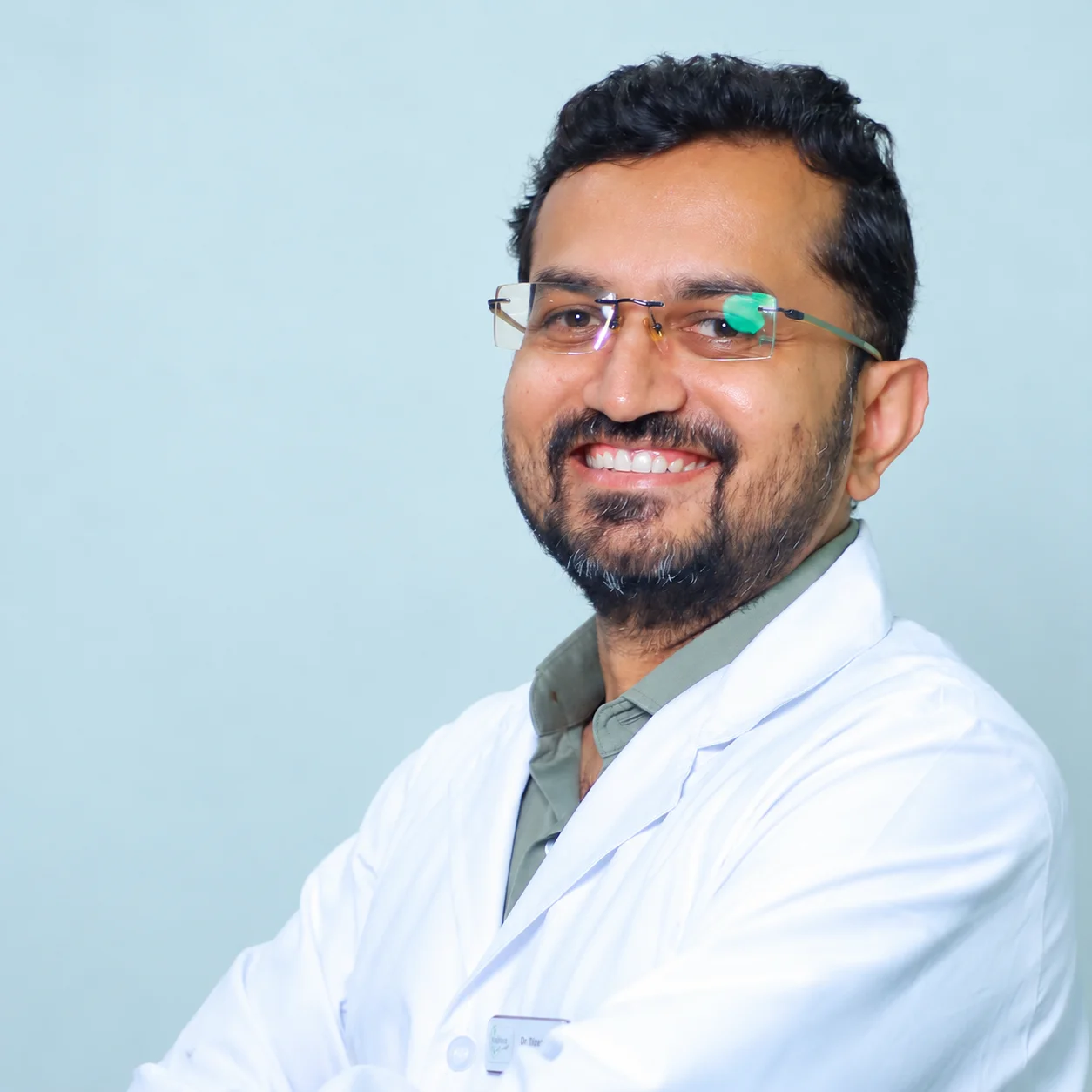
Dr Dhaval Patel
Implantologist, and Chairman,

Dr.Yashsvi
Head Dentist Sarthana
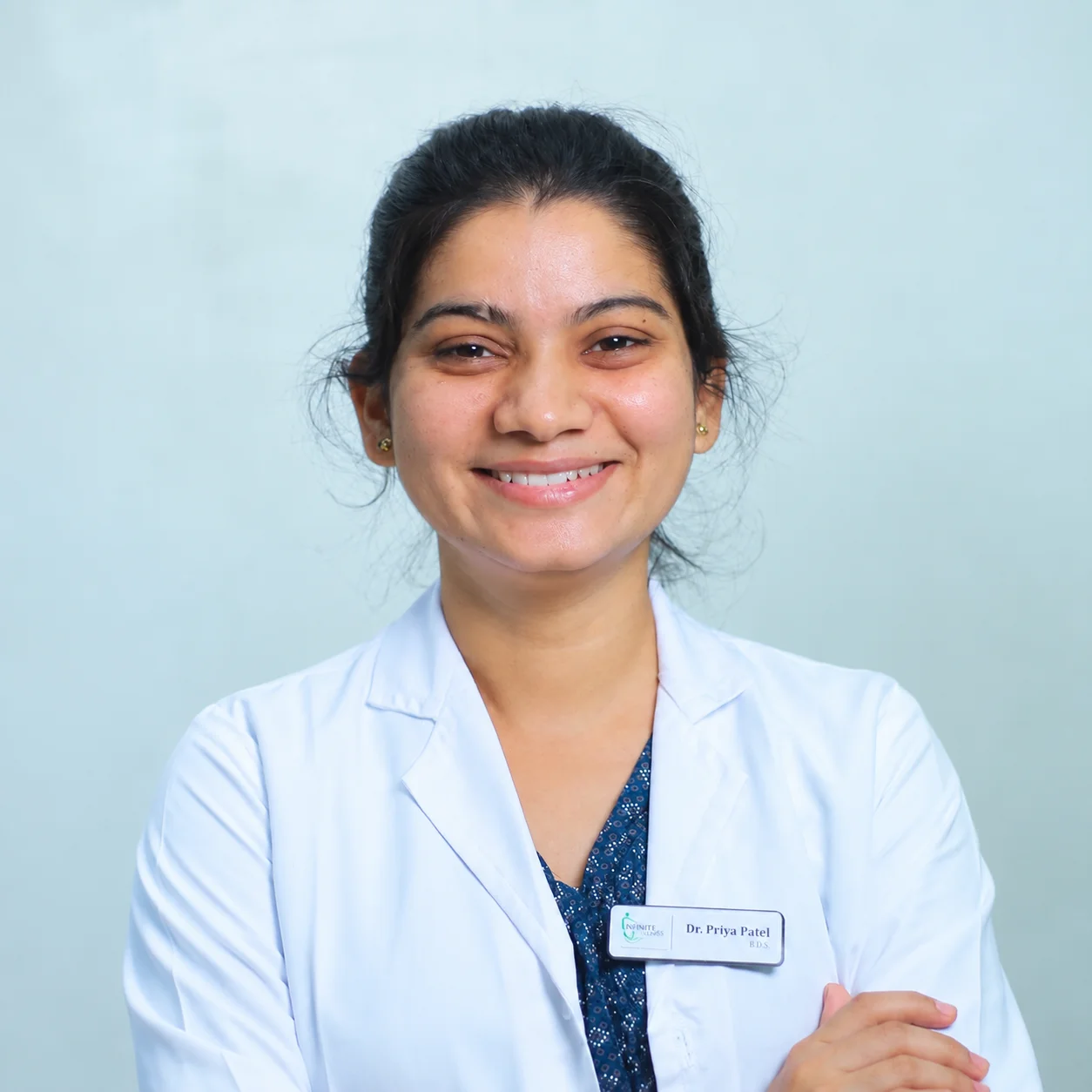
Dr.priya patel
Head Dentist Sayan
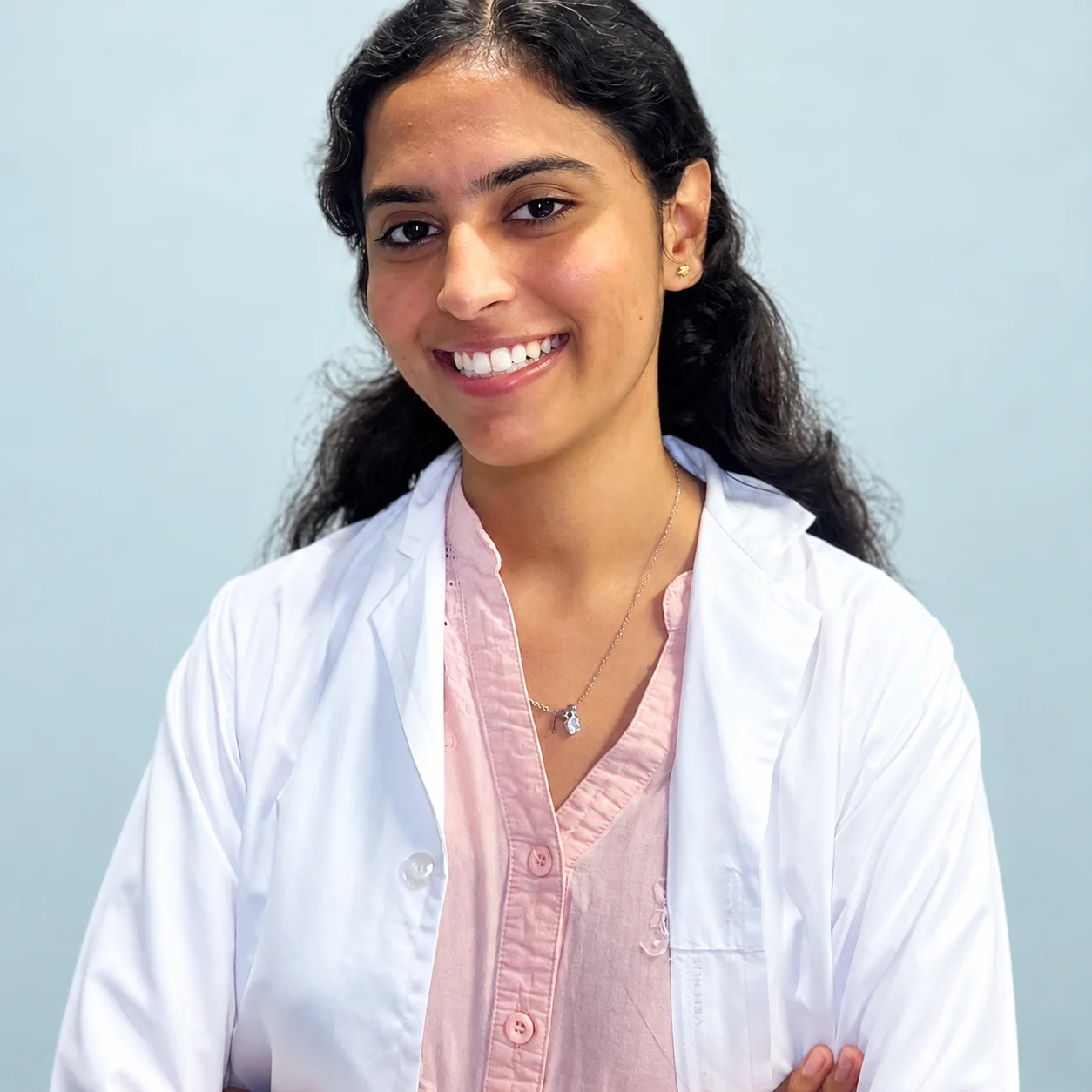
Dr.Vaidagna Dentist
Dentist in charge Sayan
Meet Your Dentist
Mr. Dhaval Patel
Dr Dhaval Patel is the founder and Chairman of InfiSmiles and a BDS-qualified implantologist with 18+ years in practice. He plans and leads implant treatment at InfiSmiles, alongside root canal, orthodontic and cosmetic care. InfiSmiles has treated 65,000+ patients since 2007 across all treatments.