
10 Signs You Need a Root Canal Treatment Immediately
Toothache at 2 AM. Pain that shoots up when you drink something cold. A gum that keeps swelling no matter what you do. Your body is trying to tell you something — and if you are ignoring it, the problem is getting worse every day.
A root canal treatment is one of the most misunderstood dental procedures. Most people dread it. But here is the truth: a root canal does not cause pain — it relieves it. The real pain comes from a tooth infection that has been left untreated for too long.
This guide covers the 10 clear warning signs that you need a root canal — so you know when to stop waiting and book that dentist appointment.
What Is a Root Canal Treatment?
Every tooth contains a soft tissue called pulp which consists of nerves, blood vessels and connective tissue. The pulp will usually does not recover from its infection or inflammation if it happens because of deep dental decay, tooth cracks and multiple dental procedures.
The root canal procedure involves extraction of infected pulp material which is followed by interior canal cleaning, sealing and tooth restoration which prevents dental extraction. The procedure is done under local anaesthesia to ensure that patients feel no pain during the treatement.
10 Warning Signs You Need a Root Canal Treatment Immediately
If you recognise any of these symptoms — especially more than one — see a dentist as soon as possible. These are not signs to monitor. They are signs to act on and consult a dentist immediately.
1. Severe, Persistent Toothache

Continuous pain is the most common sign. This pain is not normal and is excruciating, continuous and infact spread to the whole jaw area and other teeth as well. During chewing or biting food, intensity of this pain multiplies, thus making it extremely difficult to eat food. This persistent pain shows that there are high chances of nerve damage in teeth, gum infection and the pulp infection.
2. Prolonged Sensitivity to Hot or Cold
Teeth sensitivity is a normal phenomenon if it happens for a brief moment in response to temperature. But in case if someone observes that the teeth sensitivity has increased and last much longer than normal condition either when you consume something hot or cold, then it’s a sign that there may be a root canal infection. Prolonged sensitivity is a sign that pulp tissue inside teeth is decaying and highly infected.
3. Darkening or Discolouration of the Tooth
A tooth that has turned grey, brown, or significantly darker than surrounding teeth is showing a classic sign of internal tissue breakdown. When the pulp dies, it releases compounds that stain the tooth from the inside. This discolouration does not go away with whitening — it signals that the inner tissue has been compromised and needs treatment.
4. Swollen, Tender, or Raised Gums

Swelling around a specific tooth — especially if it is localised, tender to touch, or keeps coming back — often indicates an infection spreading from the tooth’s root into the surrounding gum tissue. The swelling may be soft and spongy or feel firm. In some cases, it is accompanied by a bad taste or smell from the area.
5. A Pimple-Like Bump on the Gum (Dental Abscess)
A small, recurring pimple on your gum — often called a fistula or gum boil — is one of the most specific signs of a tooth root infection. It is the body trying to drain the pus from an abscess. It may occasionally burst and release a foul taste. This is a dental emergency and should be examined immediately by a root canal treatment specialist.
6. Pain When Biting or Chewing
If a specific tooth hurts when you bite down — even with light pressure — the ligaments around the tooth root are likely inflamed. This is called periodontal ligament inflammation and is a direct result of pulp infection spreading to the root tip. The tooth may feel ‘high’ in your bite or extremely sensitive to any pressure.
7. A Cracked or Chipped Tooth with Pain
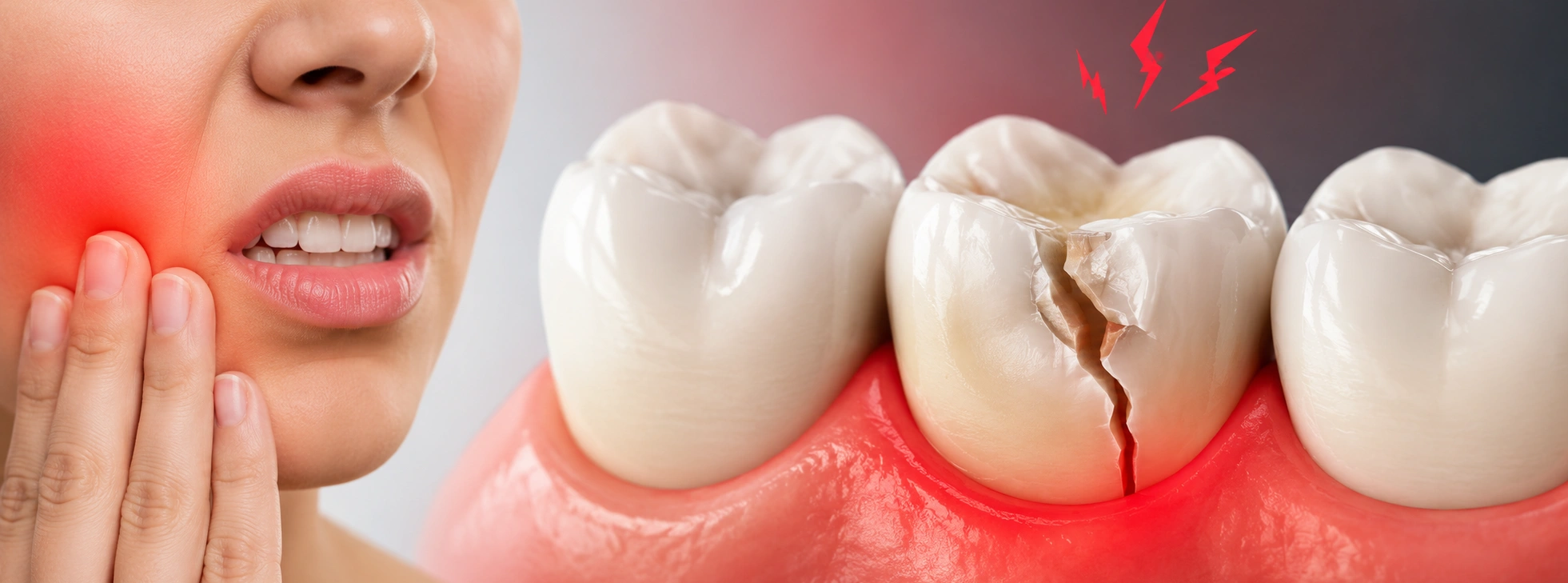
A crack in a tooth can allow bacteria to enter the pulp chamber directly. If a cracked or chipped tooth is painful — especially to temperature or pressure — the pulp may already be involved. Not every cracked tooth needs a root canal, but if there is associated pain, an examination is essential before the crack deepens further.
8. Loose Tooth in an Adult
Adult teeth should not feel loose. If a tooth feels wobbly without any injury, it could be due to the bone around the root softening from a spreading infection or nerve death. Pus from an abscess can break down the bone tissue around the tooth — making the tooth loose as the supporting structure deteriorates.
9. Deep Decay That Has Reached the Pulp
Cavities that are caught early need only fillings. But deep decay — often found during a dental X-ray — that has reached or is close to the pulp cannot be fixed with a filling alone. At this stage, the bacteria have already accessed the inner tissue and a root canal is the only way to save the tooth from extraction.
10. Previous Dental Trauma or Repeated Procedures on One Tooth
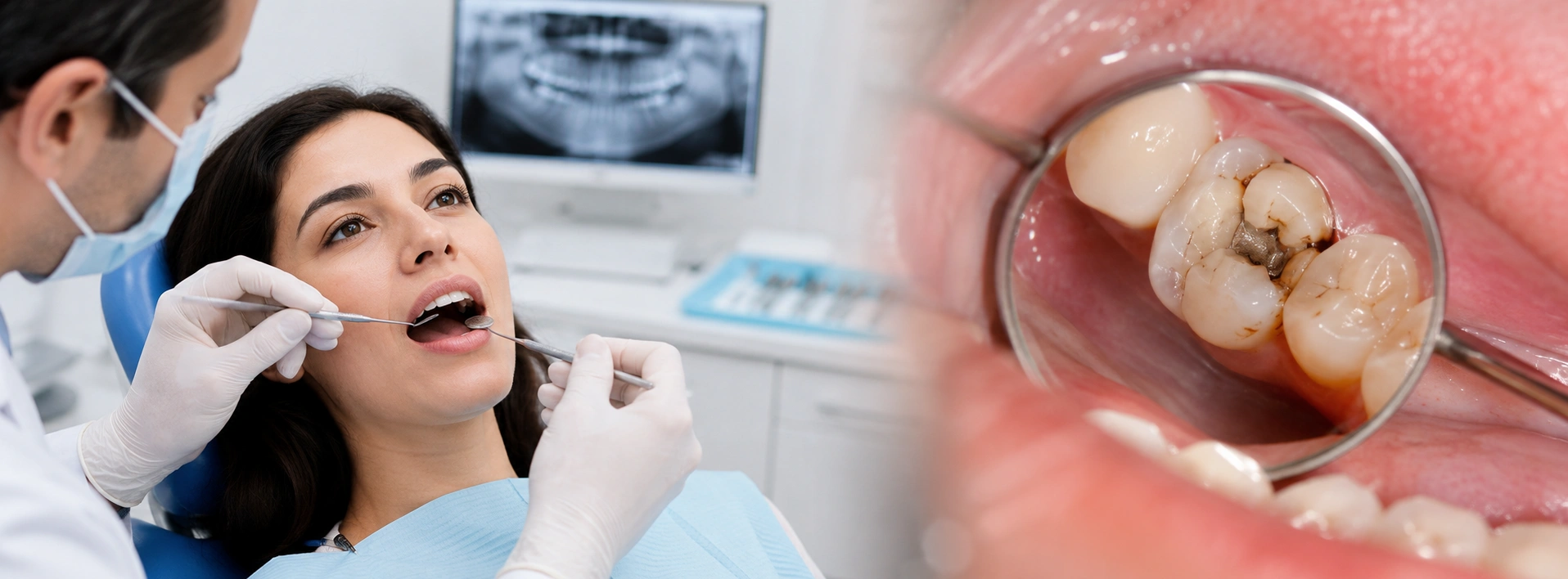
A tooth that has had multiple fillings, a failed crown, or was injured in the past is at higher risk of pulp infection — even years later. Repeated dental trauma causes cumulative stress to the pulp. If that tooth now shows any sensitivity, pain, or discolouration, it may have finally reached the point where a root canal is necessary.
Root Canal Treatment vs Tooth Extraction: Which Is Better?
Many patients ask — why not just pull the tooth? Here is the honest answer:
| Root Canal Treatment | Tooth Extraction | |
| Preserves natural tooth | Yes — tooth is saved | No — tooth is removed |
| Function after treatment | Normal biting and chewing | Requires implant or bridge to replace |
| Adjacent tooth impact | None | Adjacent teeth may shift over time |
| Cost (long-term) | Single procedure | Extraction + implant = higher long-term cost |
| Recovery | 1–2 days mild soreness | Can take longer with bone healing |
| Best choice when | Tooth structure is intact | Tooth is beyond saving |
Dental guidelines from the American Association of Endodontists (AAE) consistently recommend saving a natural tooth wherever possible. A root canal, followed by a crown, gives the tooth a normal lifespan.
What Happens During a Root Canal Treatment?
Understanding the procedure reduces fear. Here is what actually happens:
- Step 1: Clinical diagnosis: A dentist performs an X-ray of your teeth to confirm infection and analyse the root structure of your teeth.
- Step 2: treatment: before starting the treatment doctors numb the infected area with the help of a local anaesthesia. This ensures you don’t feel pain during the treatment process.
- Step 3: pulp removal: after anaesthesia the doctor create a small opening in the infected teeth and carefully remove the infected pulp fro the root canals.
- Step 4: proper cleaning: after removal of infected pulp, the dentist ensures proper cleaning, disinfection and shaping of the root canals.
- Step 5: refilling and proper sealing: the cleaned and disinfected root canals are then filled with a biocompatible material (gutta-percha) and sealed properly.
- Step 6: placing crown: a dental crown is placed over the treated tooth within next few days/weeks to protect and restore its proper functioning.
Total time: 1–2 appointments, each 60–90 minutes depending on tooth location and complexity.
What to Expect After a Root Canal
Mild soreness for 1–3 days: Normal and manageable with over-the-counter pain relief (ibuprofen or paracetamol)
Avoid hard foods: For the first few days, stick to soft foods. The treated tooth is more fragile before the crown is placed
No numbness lasts forever: The anaesthesia wears off in 2–4 hours. Sensation in the tooth returns to normal over the following days
Watch for unusual swelling: Some swelling in the first 24 hours is normal. Worsening swelling after 48 hours needs a dentist review
Complete the crown: Do not skip the crown appointment — an uncapped root-treated tooth can crack under normal biting forces, leading to tooth loss
How Much Does a Root Canal Treatment Cost in India?
Root canal costs vary by tooth type, city, and dental clinic. Here is a general range:
| Tooth Type | Approx. Cost (India) | Complexity |
| Front tooth (single root) | ₹3,000 – ₹6,000 | Simplest — single canal |
| Premolar (1–2 roots) | ₹4,000 – ₹8,000 | Moderate |
| Molar (2–4 roots) | ₹6,000 – ₹15,000 | Most complex — multiple canals |
| Crown (after root canal) | ₹3,000 – ₹12,000 | Ceramic or metal-based |
Conclusion
Your teeth require lifelong maintenance to survive, but their survival depends on your ability to understand their signals. Persistent pain, swelling, sensitivity that lingers, a darkened tooth, or a gum abscess — these are not signs to be ignored. The dentist needs to treat this condition because it shows that the tooth has developed an urgent medical problem.
Root canal treatments performed at their scheduled times provide dentists with the best method to treat dental infections while preserving natural tooth structures. The solution process becomes more difficult and costly because of your extended waiting time.
Frequently Asked Questions
How to diagnose if I need a root canal or just filling?
Diagnosis of what your teeth require either a root canel or just filling depends mostly on the intensity of pain. If the tooth pain is mild and temporary then filling will be enough. Whereas, if there is continuous pain along with extra sensitivity and swelling in gums then root canal is the solution.
Is the treatment for root canal painful?
No, because the procedure is done under local anaesthesia, this makes the infected area completely numb during treatment and patient will only feel some pressure, mild tingling sensation, but not any extra pain during the procedure.
What happens if one ignores the signs and does not get a root canal on time?
If even after continuous pain, swelling and infection in gums, someone avoids getting the root canal treatment done then the chances of infection spreading to other surrounding teeth as well. Or in worst case, if not treated on time these infection can result in extraction of teeth, which is more painful and complex procedure than root canal.
How long does a root canal treatment last?
A properly done root canal followed by a crown can last a lifetime with good oral hygiene. Studies show success rates of over 90% at 8–10 years. The crown’s condition matters — regular dental check-ups ensure the treated tooth remains protected and functional.
Is there a chance that root canal can fail? If yes, what are the signs?
Yes, there are chances that root canal can fail but those are under very rare conditions (approx 10%) or instances of re-infection or some medical negligence during the root canal procedure. Signs if root canal fail includes swelling, intense pain and sensitivity after root canal treatment. A retreatment or surgical procedure (apicoectomy) can often save the tooth even then.
Diagnosis of what your teeth require either a root canel or just filling depends mostly on the intensity of pain. If the tooth pain is mild and temporary then filling will be enough. Whereas, if there is continuous pain along with extra sensitivity and swelling in gums then root canal is the solution.
No, because the procedure is done under local anaesthesia, this makes the infected area completely numb during treatment and patient will only feel some pressure, mild tingling sensation, but not any extra pain during the procedure.
If even after continuous pain, swelling and infection in gums, someone avoids getting the root canal treatment done then the chances of infection spreading to other surrounding teeth as well. Or in worst case, if not treated on time these infection can result in extraction of teeth, which is more painful and complex procedure than root canal.
A properly done root canal followed by a crown can last a lifetime with good oral hygiene. Studies show success rates of over 90% at 8–10 years. The crown’s condition matters — regular dental check-ups ensure the treated tooth remains protected and functional.
Yes, there are chances that root canal can fail but those are under very rare conditions (approx 10%) or instances of re-infection or some medical negligence during the root canal procedure. Signs if root canal fail includes swelling, intense pain and sensitivity after root canal treatment. A retreatment or surgical procedure (apicoectomy) can often save the tooth even then.