Wisdom Tooth Pain: Causes, Symptoms & Fast Relief Methods
Wisdom tooth pain is one of the most common dental problems experienced by teenagers and adults between the ages of 17 and 25. While some wisdom teeth grow normally without causing any discomfort, many become impacted or partially erupted, leading to pain, swelling, infection, and difficulty chewing. Ignoring wisdom tooth pain can allow the problem to worsen, increasing the risk of gum infections, tooth decay, and damage to nearby teeth.
If your wisdom tooth has started hurting, understanding the cause of the pain and seeking timely dental care can help prevent complications. In this guide, you’ll learn about the causes, symptoms, effective home remedies, professional treatment options, and when it’s time to visit a dentist.
What Is a Wisdom Tooth?
Wisdom teeth are the third and final set of molars that usually emerge at the back of the mouth between the ages of 17 and 25. Most people have four wisdom teeth—two in the upper jaw and two in the lower jaw. However, some individuals may have fewer or none at all.
Modern human jaws are often too small to accommodate these extra teeth. As a result, wisdom teeth may become trapped beneath the gums or emerge at an incorrect angle, causing pain and other dental issues.
What Causes Wisdom Tooth Pain?
Wisdom tooth pain can occur for several reasons, depending on how the tooth is developing and whether there is enough space in the jaw.
1. Impacted Wisdom Tooth
The most common cause is an impacted wisdom tooth. This happens when the tooth cannot fully erupt because it is blocked by the jawbone or neighboring teeth. The pressure created by the impacted tooth often results in persistent pain, swelling, and jaw stiffness.
2. Partial Eruption
Sometimes a wisdom tooth only partially emerges through the gums. This creates an opening where food particles and bacteria become trapped, increasing the risk of infection and inflammation around the tooth.
3. Gum Infection
Inflamed gum tissue around a partially erupted wisdom tooth can develop an infection known as pericoronitis. This condition causes severe pain, swelling, bad breath, and difficulty opening the mouth.
4. Tooth Decay
Wisdom teeth are difficult to clean because of their position at the back of the mouth. Poor cleaning can lead to cavities, causing tooth sensitivity and persistent pain.
5. Pressure on Adjacent Teeth
When there isn’t enough room, the wisdom tooth may push against the neighboring molar. This pressure can damage adjacent teeth, affect bite alignment, and create ongoing discomfort.
6. Cysts or Rare Complications
In some cases, an impacted wisdom tooth may develop a cyst around it, which can damage surrounding bone and nearby teeth if left untreated.
Also Read: 10 Essential Oral Hygiene Tips for Healthy Teeth
Common Symptoms of Wisdom Tooth Pain
The symptoms vary depending on the severity of the problem. Some people experience mild discomfort, while others develop intense pain that interferes with daily activities.
Common signs include:
- Persistent pain at the back of the mouth
- Swollen, red, or tender gums
- Pain while chewing food
- Jaw pain or stiffness
- Difficulty opening the mouth completely
- Bad breath or an unpleasant taste
- Swelling in the face or jaw
- Headache or ear pain caused by pressure
- Bleeding gums around the wisdom tooth
- Sensitivity to hot or cold foods
If the pain continues for more than a few days or becomes severe, it is important to seek professional dental care.
How to Get Fast Relief from Wisdom Tooth Pain
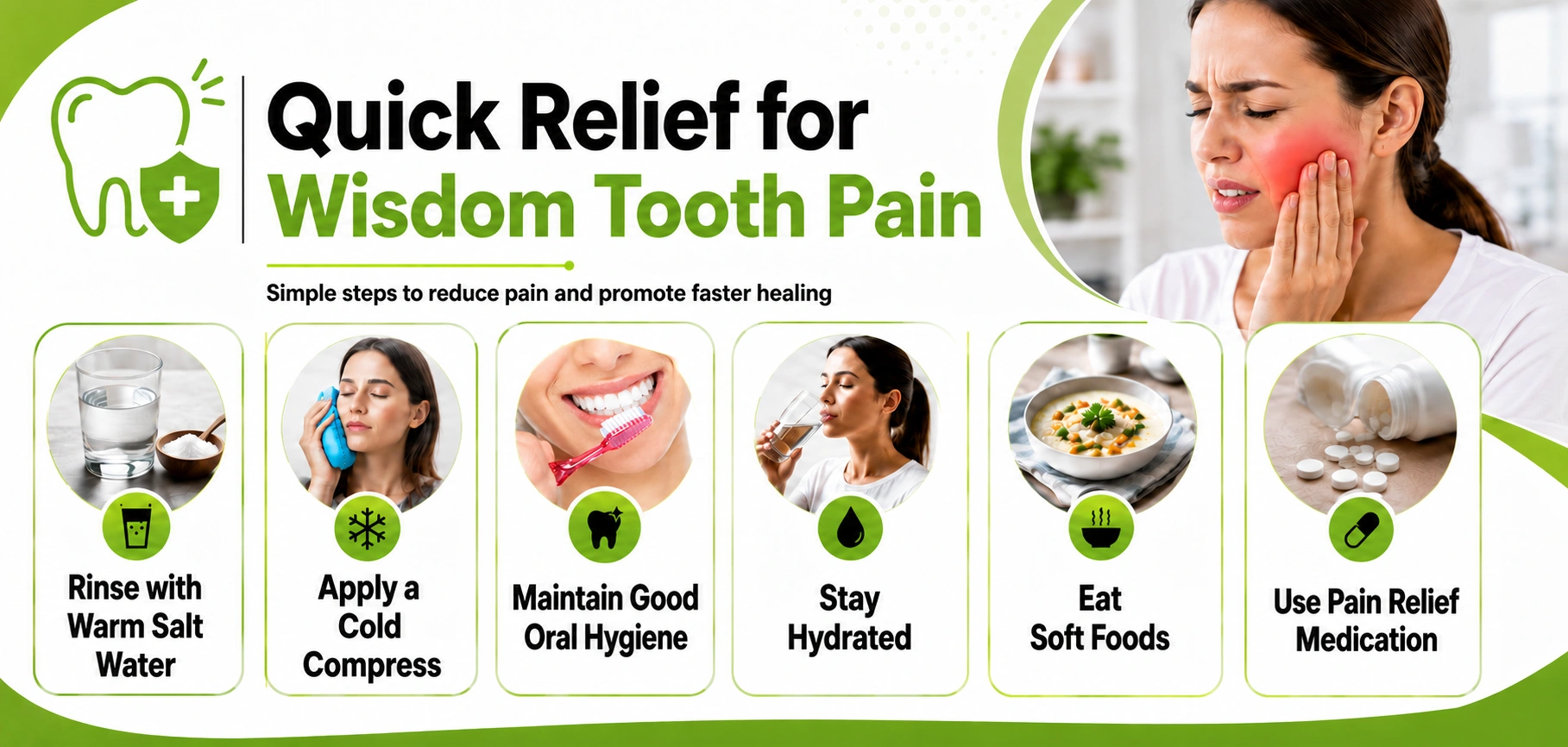
Temporary relief is possible with proper home care, but these methods do not replace professional treatment if the wisdom tooth is impacted or infected.
Rinse with Warm Salt Water
A warm saltwater rinse helps reduce bacteria, soothe inflamed gums, and remove food particles trapped around the wisdom tooth. Gargling several times a day may temporarily relieve discomfort.
Apply a Cold Compress
Applying an ice pack to the outside of the cheek for 15 to 20 minutes can help reduce swelling and numb the painful area.
Maintain Good Oral Hygiene
Brushing gently around the affected tooth and cleaning with an antibacterial mouthwash helps reduce bacterial buildup and lowers the risk of infection.
Stay Hydrated
Drinking plenty of water helps wash away food debris and bacteria from the mouth, supporting faster healing.
Eat Soft Foods
Soft foods such as yogurt, soup, mashed potatoes, smoothies, and oatmeal reduce pressure on the painful area and make chewing easier.
Use Pain Relief Medication
Over-the-counter pain relievers may temporarily reduce pain and inflammation. However, medication only manages symptoms and does not treat the underlying dental problem.
Also Read: How to Protect Your Teeth from Cavities: Expert Tips for a Healthier Smile
Treatment Options for Wisdom Tooth Pain
Treatment depends on the cause and severity of the condition.
Professional Cleaning
If food particles and bacteria are trapped around a partially erupted tooth, the dentist may clean the area thoroughly and recommend improved oral hygiene practices.
Antibiotics
If an infection is present, antibiotics may be prescribed to control bacterial growth before additional treatment is performed.
Pain Management
Anti-inflammatory medications can reduce pain and swelling while the underlying problem is being addressed.
Wisdom Tooth Extraction
When the wisdom tooth is impacted, repeatedly infected, severely decayed, or damaging nearby teeth, extraction is usually the best long-term solution. Modern wisdom tooth extraction extraction procedures are safe, effective, and performed under local anesthesia or sedation when necessary.
Most patients recover within a few days by following the dentist’s post-operative care instructions.
Home Remedies That May Help
Several natural remedies may provide temporary comfort until you visit a dentist.
Clove oil contains natural compounds that may help reduce tooth pain when applied carefully to the affected area. A cold tea bag placed over swollen gums may also help reduce inflammation. Some people find relief by rinsing with diluted antiseptic mouthwash to minimize bacterial growth.
Although these remedies can reduce discomfort, they should not delay professional dental treatment if symptoms persist.
Note: Home remedies offer only temporary relief and do not treat the root cause of wisdom tooth pain. If pain or swelling persists, consult a dentist as soon as possible.
When Should You See a Dentist?
Many people wait until the pain becomes unbearable before seeking treatment. Early evaluation often prevents more serious complications.
You should visit a dentist if:
- Pain lasts longer than two or three days
- Swelling continues to increase
- You have difficulty swallowing or opening your mouth
- Pus or drainage appears around the tooth
- Fever develops along with tooth pain
- Chewing becomes extremely painful
- The pain spreads to the ear, jaw, or neck
- Bad breath persists despite proper brushing
A dental examination and X-ray can determine whether the wisdom tooth can remain in place or requires removal.
Get Fast Relief at InfiSmiles
Experiencing wisdom tooth pain? Visit InfiSmiles for expert diagnosis, advanced treatment, and safe, comfortable dental care. Our experienced dentists provide personalized solutions to relieve pain, protect your oral health, and restore your smile with confidence.
Book Your Dental Checkup with InfiSmiles Today!
Conclusion
Wisdom tooth pain should never be ignored, especially if it is accompanied by swelling, infection, or difficulty chewing. While home remedies and pain relief methods can provide temporary comfort, they do not treat impacted or infected wisdom teeth. Early diagnosis allows your dentist to recommend the most appropriate treatment before complications develop.
If you are experiencing persistent wisdom tooth pain, schedule a dental examination as soon as possible. Prompt treatment not only relieves discomfort but also protects your overall oral health and helps prevent more serious dental problems in the future.
Frequently Asked Questions
How long does wisdom tooth pain usually last?
Pain caused by a wisdom tooth may last from a few days to several weeks, depending on whether the tooth is erupting normally or is impacted. Persistent pain should always be evaluated by a dentist.
Can wisdom tooth pain cause headaches?
Yes. Pressure from an impacted wisdom tooth can radiate to the jaw, ear, neck, and head, leading to headaches and facial discomfort.
Is wisdom tooth removal always necessary?
No. If the wisdom tooth grows normally, is healthy, and can be cleaned properly, removal may not be required. Your dentist will recommend extraction only if it is causing current or future problems.
What foods should I avoid during wisdom tooth pain?
Hard, crunchy, spicy, sticky, and very hot foods can worsen irritation. Soft, easy-to-chew foods are generally more comfortable until the pain improves.
Pain caused by a wisdom tooth may last from a few days to several weeks, depending on whether the tooth is erupting normally or is impacted. Persistent pain should always be evaluated by a dentist.
Yes. Pressure from an impacted wisdom tooth can radiate to the jaw, ear, neck, and head, leading to headaches and facial discomfort.
No. If the wisdom tooth grows normally, is healthy, and can be cleaned properly, removal may not be required. Your dentist will recommend extraction only if it is causing current or future problems.
Hard, crunchy, spicy, sticky, and very hot foods can worsen irritation. Soft, easy-to-chew foods are generally more comfortable until the pain improves.